







 Xing
 LinkedIn
 E-Mail

The Future Readiness of Innovation
How companies make better innovation decisions – and purposefully make promising concepts more future-ready
Many innovations fail not because they are technically immature, unwanted, or uneconomic today. They fail because their assumptions about future markets, customers, costs, technologies, or competitors were not made visible, tested, and shaped in time. The Future Readiness Level (FRL) complements existing innovation processes with exactly this perspective.
Often, the problem of failed innovations lies not in the idea – but in untested assumptions about the future
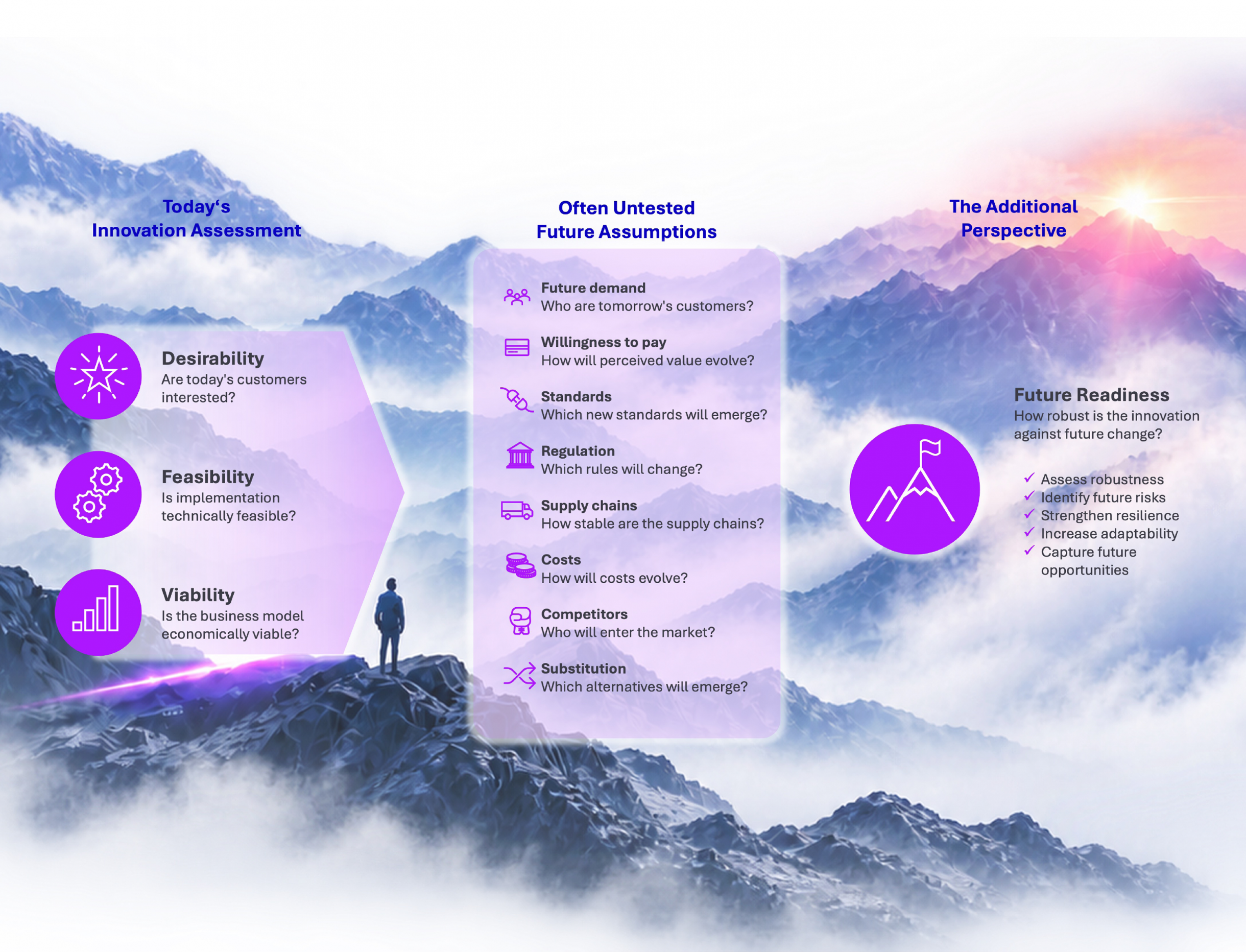
Today‘s evidence is not enough: An innovation‘s potential is usually assessed on the basis of today‘s evidence. This means that companies analyze today‘s customers, today‘s costs, available technologies, and today‘s competitors. And while this perspective is important, it is not enough to realistically assess the actual chances of success in a changing future.
The invisible gap: The problem often lies not in the idea – but in untested assumptions about the future. Many investments fail because key assumptions about the future are not sufficiently tested. Future demand, willingness to pay, possible new standards, expected regulation, the stability of supply chains, or the risk of substitution by alternative solutions are variables that remain unchecked.
A fourth, decisive perspective: Desirability, feasibility, and viability – future readiness complements the three classic perspectives of innovation assessment. The decisive question: how robust is the innovation in the face of future change? This means looking not only at today‘s conditions for success, but also at the resilience and adaptability of the innovation across different future scenarios.
More than risk avoidance: Future Readiness is about more than avoiding the wrong bets. It helps strengthen good but still fragile innovations by identifying future risks early and deriving concrete measures to increase resilience, flexibility, and future compatibility.
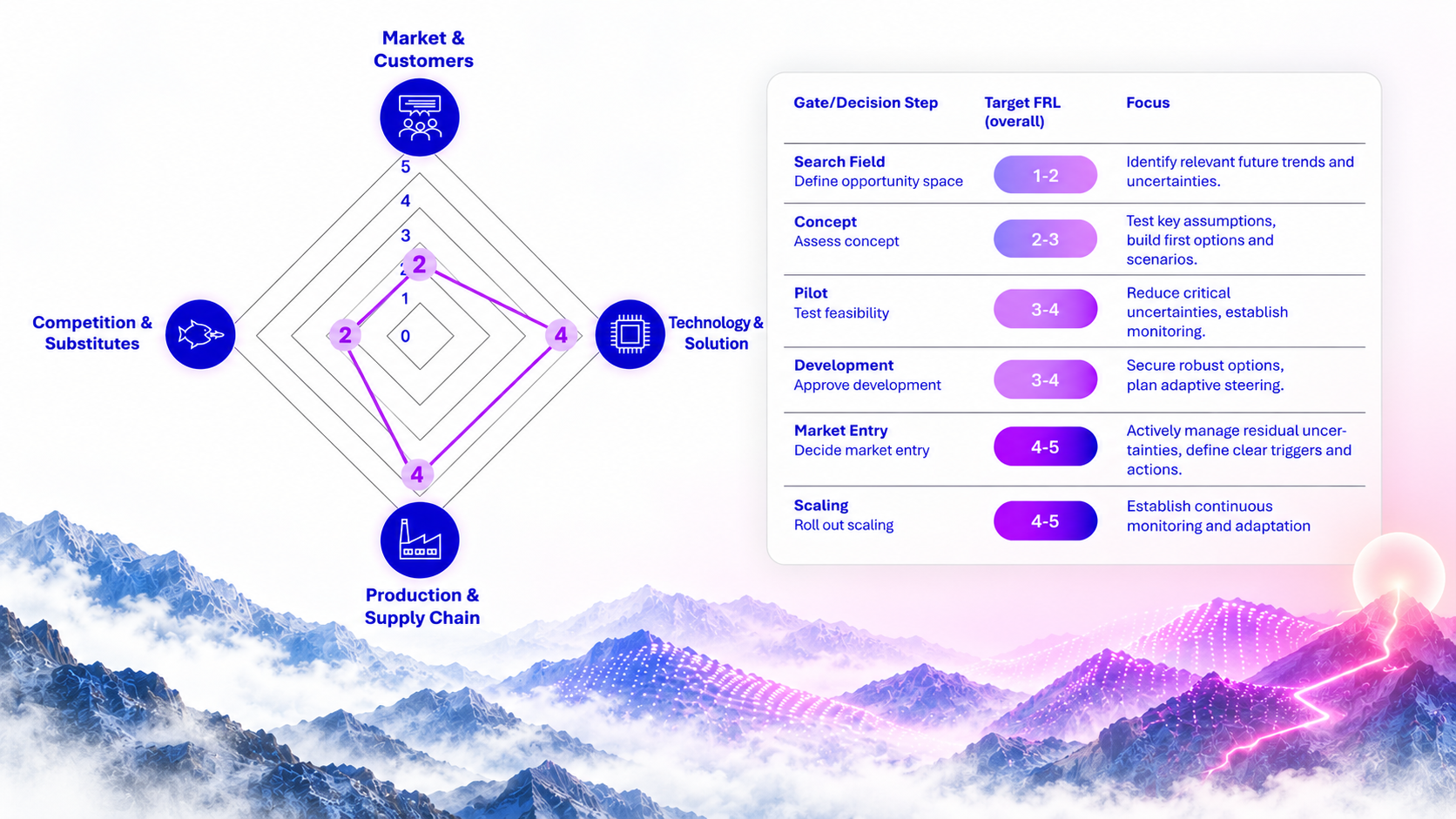
The Future Readiness Level is a management tool for better gate and investment decisions
The Future Readiness Level (FRL) assesses how well the future-related assumptions of an innovation have been made visible, tested, and whether they are decision-ready. It shows where the greatest uncertainties lie and which additional analyses, options, or experiments are needed before the next decision step. FRL complements existing stage-gate and innovation processes. It does not focus on the general attractiveness of an idea, but on the quality of the future assumptions that are crucial for robust decisions.
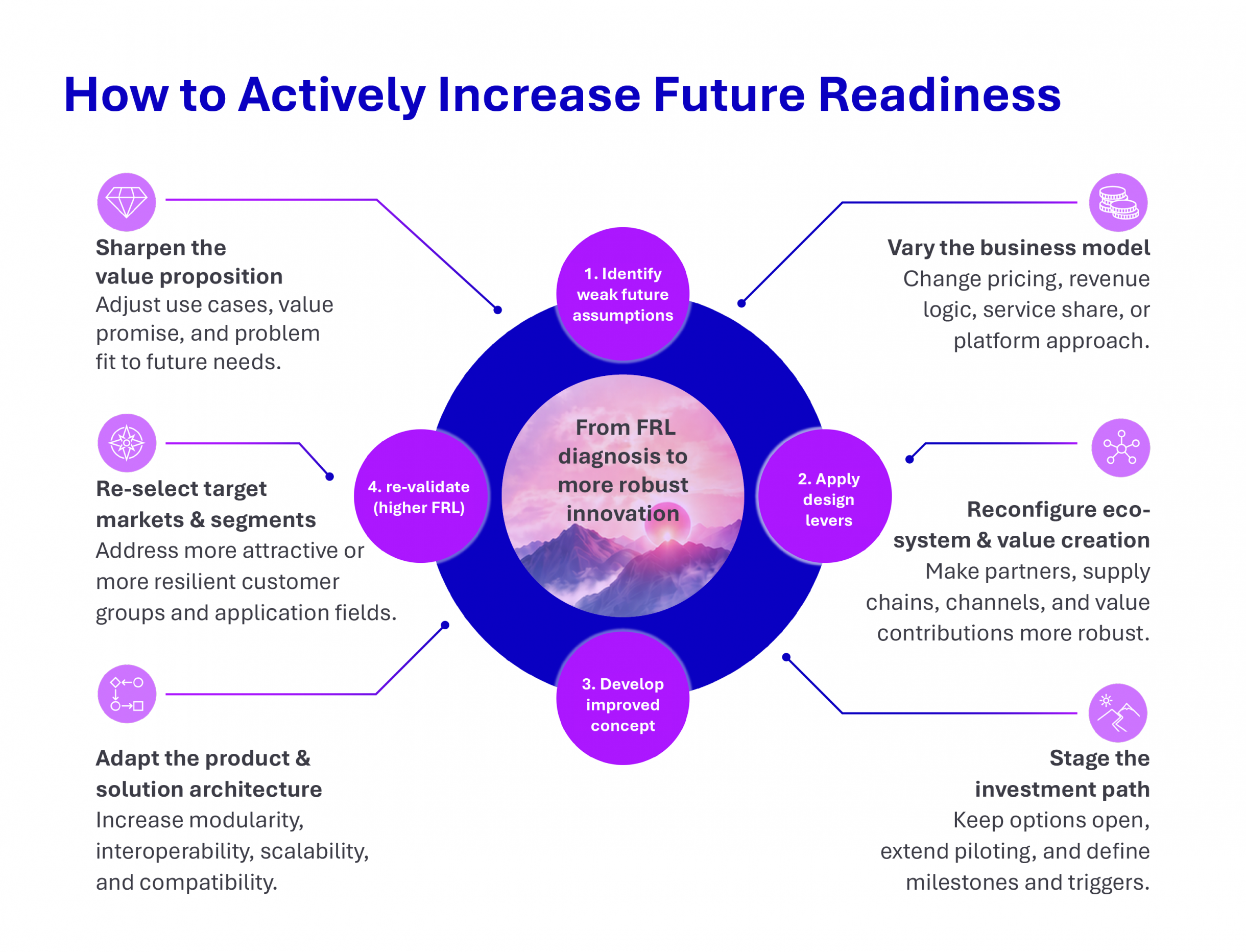
FRL is not just a diagnostic tool – it is also a design framework for more robust innovation concepts.
The Future Readiness Level provides a structured design framework for this and makes visible which levers can make an innovation more robust, adaptable, and future-ready. When the FRL shows that the key future assumptions of an innovation concept are weak or uncertain, this does not automatically mean the innovation should be stopped. It is often more sensible to revise the concept in a targeted way. FRL provides a structured design framework for this and makes visible which levers can make an innovation more robust, adaptable, and future-ready.
Download the Foresight Spotlight to learn why and how we assess and increase the future readiness level of innovation for our clients.